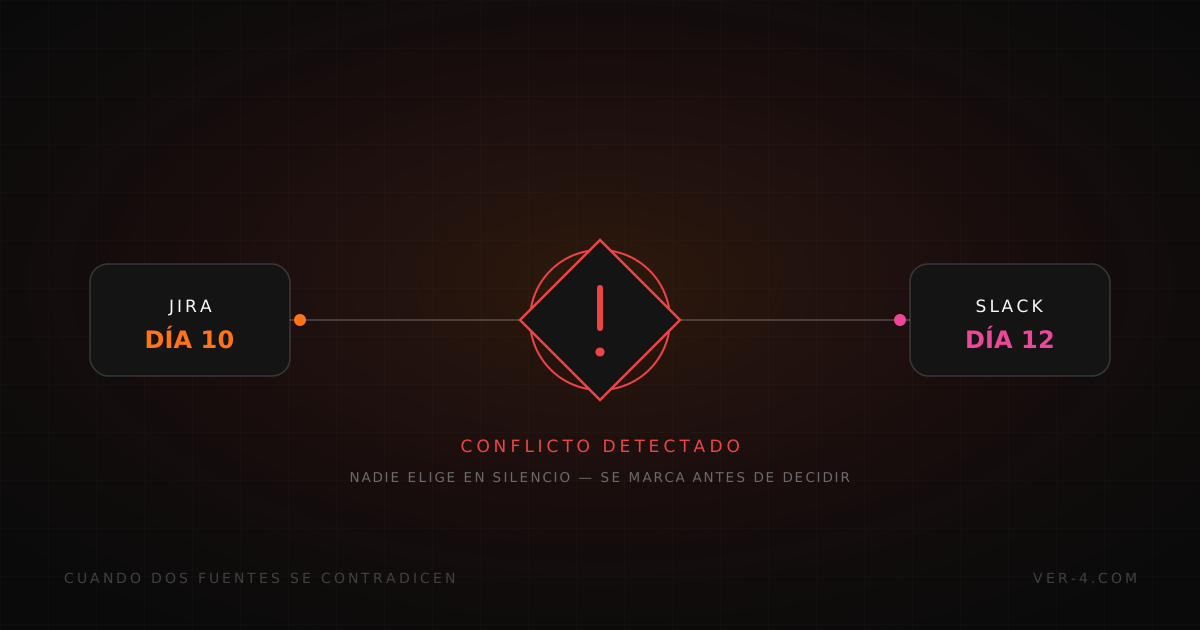
The most expensive failure is rarely the missing data point. It is the data point that is contradicted and nobody notices. Two sources say different things, a system averages or picks the first without warning, and the error travels intact into a report, an agent, a decision.
Detect, do not average
Centro de Verdad compares claims about the same entity —with rules and with NLI— and detects when they do not match. When "finance says the margin is 34%" and "pricing says 28%", the system does not blend them into a comfortable 31%. It flags them in conflict and shows you both, each with its source.
Averaging two figures that do not match does not resolve the contradiction. It hides it.
The difference is fundamental: an average delivers a clean, false number; an explicit conflict puts the problem on the table while you can still resolve it. The contradiction is not a bug in the report — it is the most valuable signal the report can give you.
In the action layer, it blocks
And this is not dashboard decoration. In the action layer, a data point in conflict stops the action until a human resolves it. An agent does not execute a payment, a deploy, or a price change on data that two sources dispute. Because acting demands more truth than reading: reading a doubtful data point costs a misunderstanding; acting on it costs a wrong action.
Verified · principle P12 — acting demands more truth than reading
Showing the conflict —instead of choosing silently— is, in the end, the difference between a report that reassures and one you can trust.